The battery energy storage market is moving fast. Texas nearly doubled its grid-scale BESS fleet in 2025. California is mandating storage alongside new solar. Data center developers are deploying it behind the meter to de-risk interconnection. By most measures, BESS has arrived.
And yet, if you talk to the engineers actually connecting these systems, the frustration is consistent. What consistently causes project delays, unexpected costs, and underperformance relative to projections is the power electronics and control stack sitting between the battery and everything else it needs to talk to. That stack is where the complexity lives, and in most conventional installations it is still a collection of individually specified components that were never designed to work together.
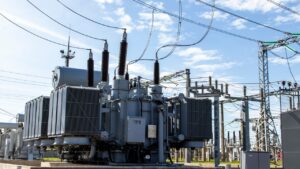
Here is what that looks like in practice. A grid-scale BESS project typically requires a battery management system, a bidirectional inverter, a step-up transformer to reach medium voltage for grid connection, reactive power compensation, protection systems, and a supervisory control layer that tries to coordinate all of it. Each of those components comes from a different vendor, with different communication protocols, different maintenance schedules, and different failure modes. The integration work to make them function as a coherent system is substantial, the commissioning time is long, and the surface area for problems is wide.
This matters more as the applications get more demanding. A utility-scale BESS sitting on a stable grid connection doing simple peak shifting can get by with that architecture. When the same battery needs to respond to rapid load changes from a co-located EV charging hub, coordinate with on-site solar generation, maintain grid-forming capability during outages, and feed 800VDC directly to a data center load, the conventional stack starts to show its limits. The components were not designed for that operating envelope, and the control latency between independently managed systems becomes a real performance constraint rather than a theoretical one.
Solid-state power electronics change the architecture of this problem at a more fundamental level. An SST-based integration platform can handle bidirectional power flow natively between the battery, the grid, and multiple load types without requiring a separate inverter for each interface. The galvanic isolation that normally requires a standalone transformer is built in. AC and DC interfaces can coexist in the same modular unit. And because the entire conversion and routing function runs through a single integrated control layer, the system can respond to changing conditions, a cloud passing over a solar array, a spike in EV charging demand, a grid voltage excursion, in milliseconds rather than the seconds it takes for separate components to relay signals to each other.
At Alderbuck, the Nexus Power Unit was designed from the ground up to serve as the integration point for exactly these configurations. Connecting BESS, solar, EV charging infrastructure, and grid connection through a single modular platform removes the multi-vendor coordination problem by design rather than by workaround. PowerVectorAI™ handles the real-time optimization of energy flows across the system, so the BESS is not just responding reactively but operating according to a continuously updated strategy based on grid conditions, pricing signals, and load forecasts.
The result is a system that performs the way the project economics assumed it would when the financial model was built, rather than one that meets spec on individual components but underdelivers as an integrated whole.
The battery market is maturing quickly. The integration infrastructure that surrounds it needs to keep pace.