If you work in energy, you have probably started hearing the term solid-state transformer a lot more often. And if you have been in grid infrastructure for a while, you know that genuinely new transformer technology is not something anyone has said seriously in decades.
So what is actually changing, and why now?
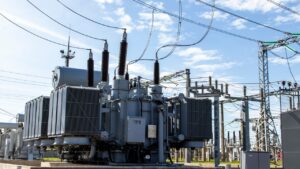
The conventional transformer is one of the most successful pieces of engineering in history. It does its job reliably, it is cheap to manufacture, and it has been doing exactly what it was designed to do for over 130 years. Step voltage up, step it down, provide galvanic isolation. The problem is not that it stopped working. The conventional transformer has not failed. The grid it was designed for has simply changed.
Today’s grid has solar panels feeding power back into lines that were built to carry power in one direction. It has battery storage systems that need to charge and discharge based on market signals. It has EV charging hubs pulling megawatt-scale loads in bursts. It has AI data centers demanding power at densities that would have seemed impossible a decade ago. The conventional transformer has no opinion about any of this. As David Pascualy, Chief Commercial Officer at Alderbuck, told Power Magazine: “a normal standard transformer doesn’t communicate with the grid.” It reacts to whatever shows up on the line, adapts to nothing, and offers no visibility into what is happening around it.
A solid-state transformer works differently at a fundamental level. Instead of relying on electromagnetic induction through copper and iron at line frequency, it uses high-frequency power electronics, specifically wide-bandgap semiconductors like silicon carbide and gallium nitride which allows it to handle voltage transformation at frequencies far above the 60 Hz grid standard. That shift in operating frequency is what makes everything else possible. At higher frequencies, the magnetic components shrink dramatically. With power electronics doing the work instead of passive magnetics, the device can actively control what is happening rather than simply reacting to it.
That active control is where things get interesting. A solid-state transformer can regulate voltage in real time, manage bidirectional power flow, suppress harmonics, provide reactive power support, connect AC and DC systems natively, and respond dynamically to grid disturbances. It can do in one device what previously required a transformer, an inverter, a power quality conditioner, and a separate control system. More importantly, it can be managed by software.
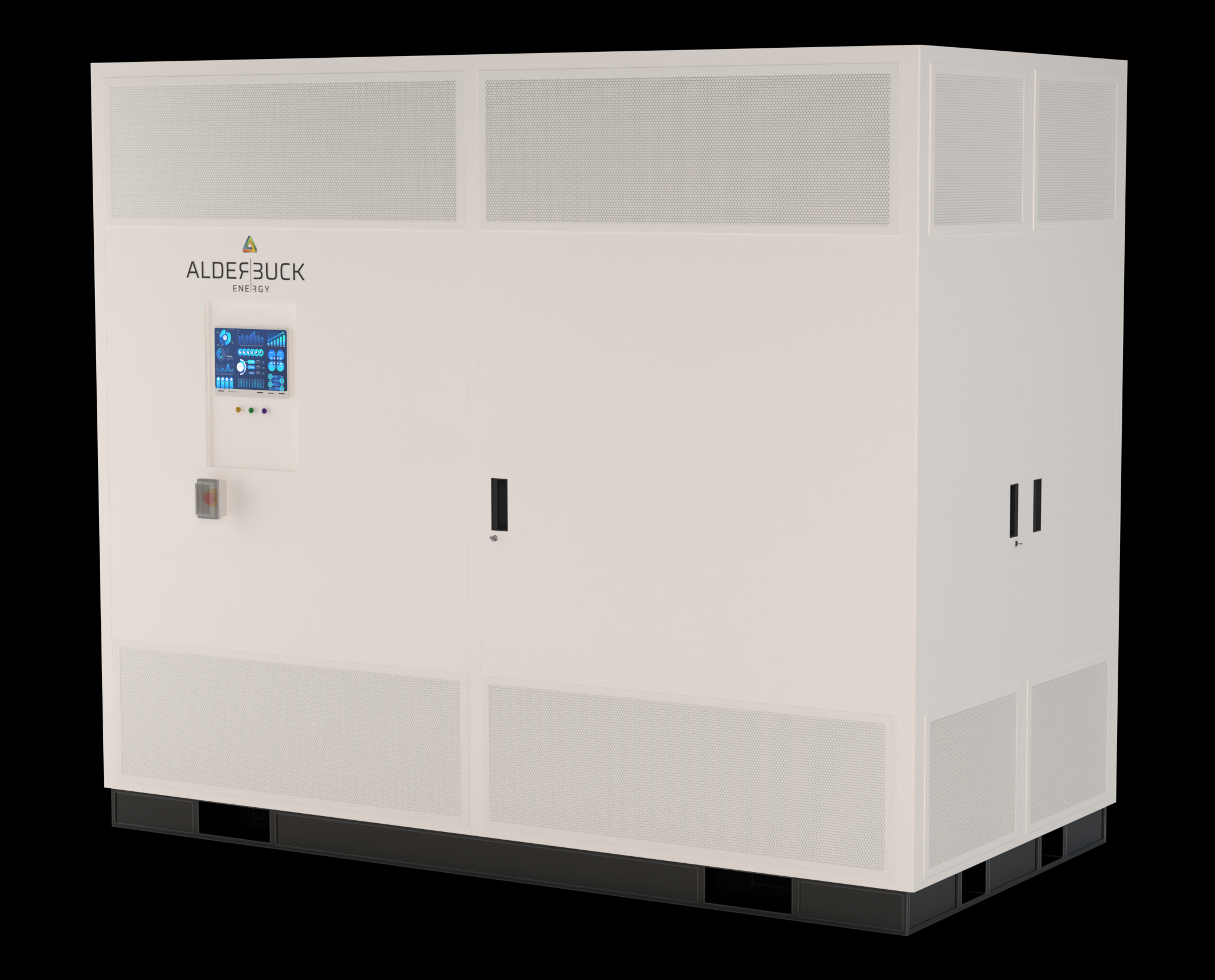
That last point changes the economics of the whole conversation. Hardware consolidation helps, but a device that can be optimized continuously by an intelligent energy management platform is a different kind of asset entirely. At Alderbuck, we pair the Nexus Power Unit with PowerVectorAI precisely because the hardware capability and the software intelligence need to work together. An SST without a brain is faster and smaller than a conventional transformer. An SST with real-time AI-native coordination of bidirectional energy flows becomes something closer to a mini-substation, one that can participate actively in grid operations, optimize energy costs, and adapt to whatever mix of sources and loads it is connected to.
Is the solid-state transformer ready to replace every conventional transformer everywhere? Not yet. Transmission-level transformers at large substations are not the near-term target, and the cost premium over conventional equipment is still real for simple, stable applications where a conventional transformer does everything required. But for the growing class of applications where the grid edge is complex, where DERs are mixed with storage and variable loads, where data centers need 800VDC rather than 480VAC, where EV hubs need to absorb and dispatch power dynamically, the conventional transformer is the wrong tool. The question is how quickly it moves from promising to practical.
We are getting there fast.